
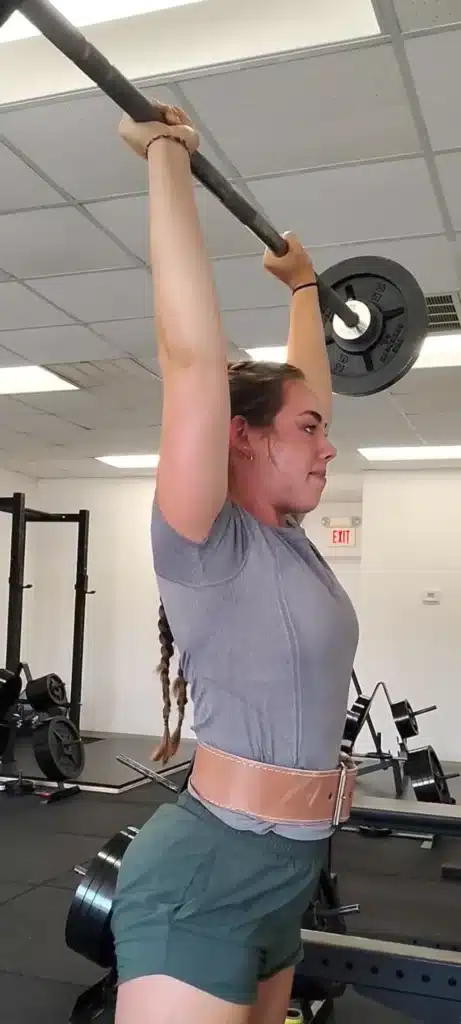
If you’ve ever felt the room spin after a press — or worse, blacked out — it’s not just bad luck. It’s your body giving out under strain, and if you don’t deal with it, it’ll happen again.
Let’s talk about what’s going on — and how pin pressing keeps you safer, gets you stronger, and helps your nervous system handle heavier loading.
First: Why You’re Blacking Out
It’s called a vasovagal response. Fancy term for a simple problem: your heart rate and blood pressure tank, blood stops flowing to your brain, and you hit the ground.
Here’s how lifters trigger it:
- Holding your breath wrong — Using the Valsalva to brace is good. Holding it too long or letting it go too fast? That’s where people pass out.
- Lifting too heavy, too tired — Dehydrated, under-recovered, insufficient carb consumption, or training in the red too often? That’s stress your nervous system can’t keep up with, especially during heavy press singles.
- Standing up too quick after a hard set — Blood pools in your legs, your brain doesn’t get enough, lights go out.
- Bad breathing habits — If your breathing’s all over the place, the rest of your system will be too.
You’ll feel it coming:
- Dizziness
- Nausea
- Tunnel vision
- Cold sweat
- Weak knees
- Blackout
If this sounds familiar, you need to change something before the weight makes the change for you.
Now: What Is Pin Pressing?
Pin pressing is a variation of the overhead press where you press the bar off pins, inside a rack, from a dead stop. No unrack. No walkout. No weight hanging over your head when you don’t have control.
This is how smart lifters build a strong press. In the process of performing a heavy press attempt, occasionally a rep will last in excess of 9 or 10 seconds. That’s time your body is starved for oxygen — and that makes the syncope worse.
Why Pin Pressing Works
1. It’s Safer
If you pass out or lose control, the bar doesn’t land on your head — it drops straight back to the pins. That’s the whole point. Built-in safety. No spotter needed. No guessing.
2. It Handles More Weight
You can pin press more than you can strict press. Why? You’re not starting from the bottom. That lets you overload the top range of motion — which trains your nervous system to deal with heavy loads. That means stronger lockouts, improved force production, more strength to press through a sticking point, and decreased likelihood of blacking out.
3. It Builds Real Pressure Tolerance
Pin pressing teaches your body to handle strain. You’re pressing with zero momentum but at a decreased range of motion. As a result of that shorter ROM, you can press heavier than normal. So when you go back to regular pressing — everything feels lighter.
How We Use It at Traditional Strength
We’ve run this with lifters in their 20s and their 60s. Here’s how it looks:
- 1x/week, depending on your program
- 3 sets of 3 reps
- Use 100–110% of your overhead press
- Start at forehead height, but adjust pin height to hit your sticking points as increasing the load becomes more difficult
- Combine with a heavy and volume pressing day so you can retain your technique for the competition press
We also coach every lifter on how to breathe and how to brace, because that’s half the battle.
Don’t Shrug Off a Blackout
If your vision’s going fuzzy under the bar, that’s not something you tough out. It’s something you fix.
Ask yourself:
✅ Did I sleep well?
✅ Am I eating enough carbs before each workout and protein after?
✅ Am I breathing correctly?
✅ Do I really know what I’m doing?
Final Word
At Traditional Strength, we want you to press more, stay safe, and keep improving. Pin pressing is the tool.
It’s controlled. It’s heavy. It teaches your nervous system to adapt to pressure — and it gets you strong.
If your press is stalling — or worse, making you dizzy — this is the lift you’re missing.
Want help putting this into your program?
Set up a free consultation on our website.
We’ll show you how to train through it, not around it.

By Greg Herman
Owner and Head Coach
of Traditional Strength Gym
in Edmond, Oklahoma