
Most Gyms Fail You
We live in an era designed around comfort. Your food, your home, your communication, entertainment, and transportation—everything has been optimized for ease and comfort. Unfortunately, over the past few decades, this desire for convenience has even infiltrated our health decisions. We see it when doctors prescribe drugs where simple exercise would suffice. This desire for doing what is easy and comfortable has changed our society’s perception of what constitutes fitness. In other words, the gym isn’t what it used to be.
That doesn’t mean there haven’t been any improvements, though. Training environments have become significantly more sanitary, less intimidating, and practically all of them now have climate control. However, they have also become excessively inefficient. Walk into any commercial gym and you will see an ocean of machines: treadmills, elliptical bikes, StairMasters, incline, decline, and flat benches, cable machines for every imaginable angle—and even those deadly Smith machines.
It can all be so overwhelming. While variety is normally a good thing, the modern gym-goer who’s new to lifting is drowning in a sea of unnecessary equipment.
Complexity Isn’t Better
The truth is, out of a desire to make fitness more comfortable, society has convinced itself that more complicated workout programs are better. And we chose that course, because we believed that 20 lighter weight isolation exercises are equal to 3 difficult lifts. But they are not equal and because they are not equal they do not yield the same results.
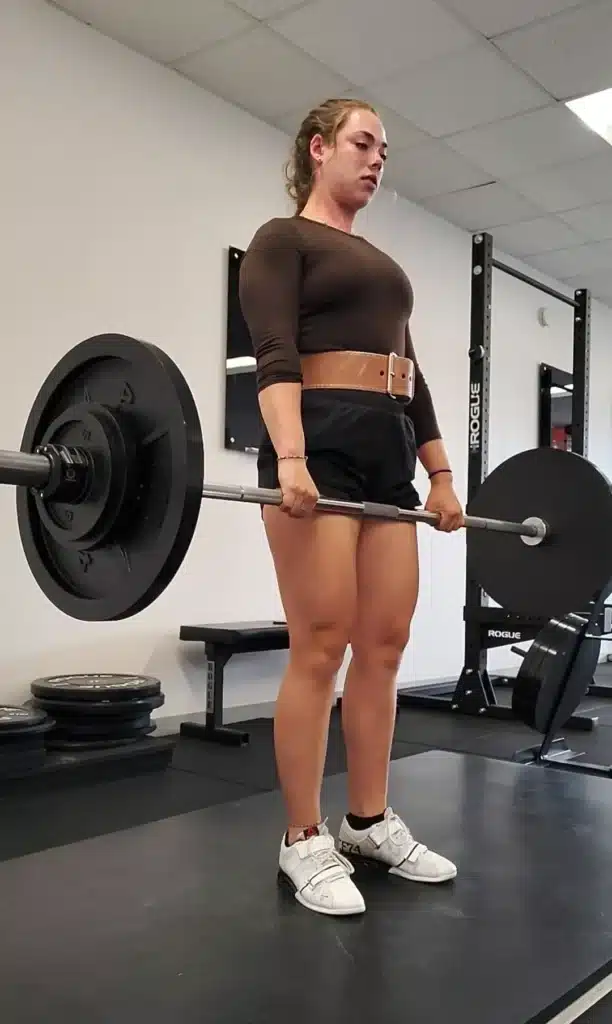
More complicated is not always better. If someone simply wants to get bigger and stronger, 95% of the equipment in a typical commercial gym is completely unnecessary to achieving that goal. They just have to wade through the ocean of isolation exercise machines until they get to the back of the gym. Because tucked in the back corner of every gym across the nation is a rusty barbell and a dusty squat rack.
Gym rats across the country are finally starting to realize that after years of doing 3 sets of 12 reps of triceps pushdowns, their arms aren’t growing. The functional fitness gurus have failed them, and the kettlebells only leave them sweaty and tired—instead of bigger and stronger. But a solution can be found in more traditional barbell strength training methods. Because traditional training methods yield results at a much faster pace.
Why is that? Why are big compound lifts—like the squat, bench press, and deadlift—so much more effective at building mass and growth? What other benefits will come with these movements?
Why Traditional Weight Training Methods Work
The big compound lifts—like the squat, bench press, and deadlift—are movements that engage multiple muscle groups at once. They work not only the primary muscles but also the stabilizers, the connective tissue, and the nervous system. When you squat, for instance, it’s not just your quads doing all the work. Your glutes, hamstrings, the musculature of your torso, and even your upper body play a significant role in supporting and stabilizing the movement. The same is true for the bench press and deadlift. These lifts are full-body movements that force your body to work in coordination, engaging multiple muscle groups and allowing for a higher load to be lifted than isolated machine exercises could ever achieve.
Here’s why these compound lifts are so effective:
1. They Maximize Muscle Recruitment
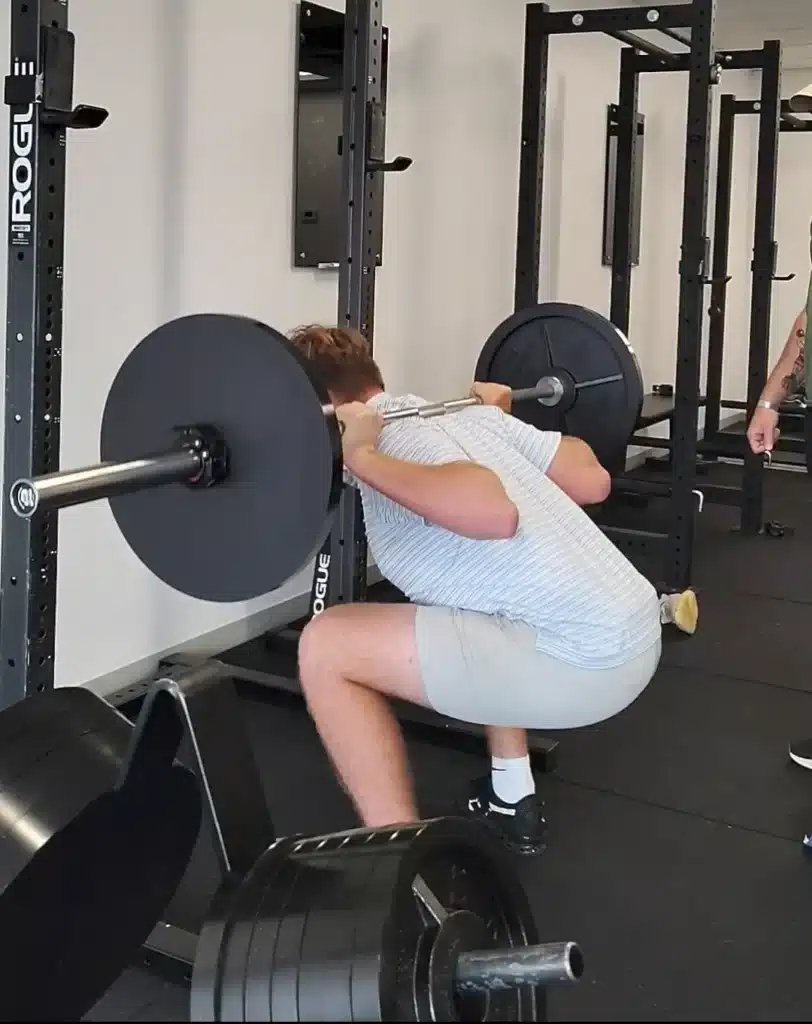
Unlike isolation exercises that target a specific muscle group, compound lifts recruit multiple muscles simultaneously. The squat works your quads, hamstrings, glutes, core, and back. The bench press works your chest, shoulders, and triceps, while the deadlift activates your glutes, hamstrings, core, back, and forearms. This broad muscle activation leads to more overall growth and development in less time, because heavier weights can be used. Heavier weights require more motor unit recruitment, leading to greater force production and, as a result, increased muscle growth.
2. They Build Strength and Size
Heavy compound lifts build strength along with muscle size. The more weight you can move, the larger your muscle bellies get. These things are directly related. The heavier the weight on the bar, the more force production is required to move it. Larger muscle bellies produce greater force, and as a result of the heavy weight, your body adapts by growing even more.
3. They Stimulate Hormone Production
Lifting heavy weights with compound movements stimulates the release of critical growth hormones like testosterone and human growth hormone (HGH). These hormones are key players in muscular recovery, fat loss, and overall physical development. The more frequently you lift, the more often your body produces these hormones. As a result, your body recovers better from the stress of weight training, which stimulates more growth.
4. They Define Functional Movement
These big lifts mimic real-life movements. For example, squatting strengthens your ability to walk, stand, and carry heavy objects. The deadlift, similarly, is all about picking things up from the ground, a skill we use every day. By training your body with heavier versions of these types of movements, you improve your ability to perform in everyday life and reduce the risk of injury.
5. They Improve Coordination
Unlike some machines that force you into a fixed path, compound lifts force you to stabilize, learn coordination, and improve balance. These movements force the smaller muscle groups to work in conjunction with the larger muscle groups. Developing these muscles together translates not just to better lifting but to overall improved body mechanics in everything you do. When done correctly, these lifts teach your body how to move efficiently, maximizing strength while minimizing injury risk.
6. They Increase Metabolic Function and Decrease Excess Body Fat
Because compound lifts produce larger muscles and require more energy, they burn more calories. A heavy squat, for example, requires more glycogen fuel than a few sets of calf raises. This is because a heavy squat requires more muscles to operate than an isolation exercise like the calf raise. So not only is your body burning surplus calories while exercising, but also it is becoming more metabolically efficient since your more numerous and larger muscle bellies will require more metabolic resources just to exist. As a result, heavy barbell strength training leads to a more toned appearance.
The Simplicity of Strength
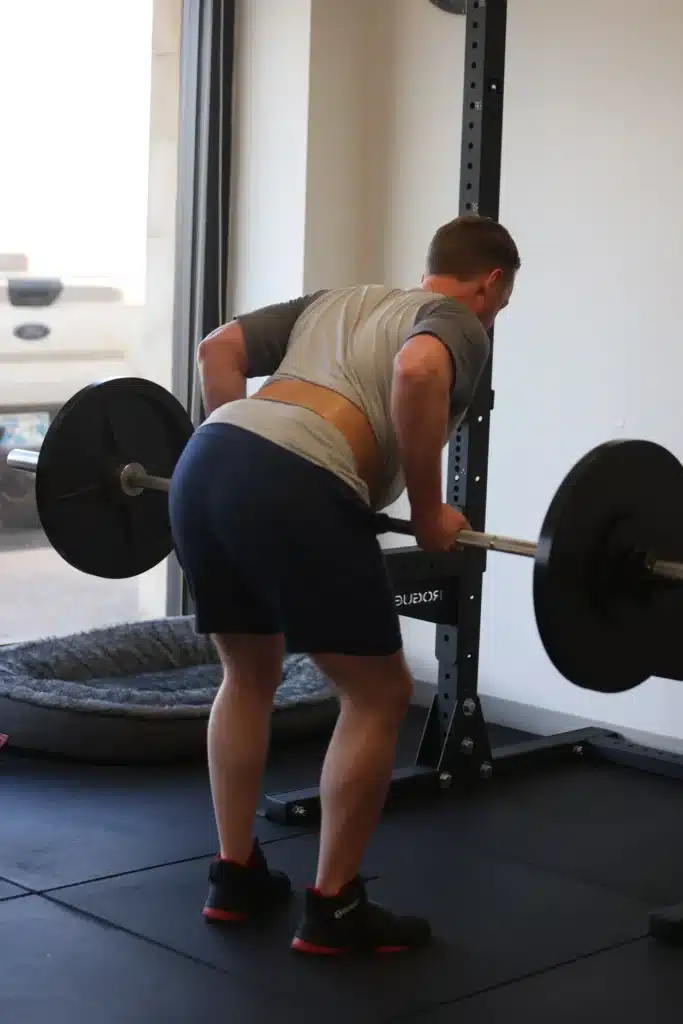
Weight training doesn’t need to be complicated. In fact, less is more. The most effective weight training programs aren’t the ones with endless variations of exercises and machines—they’re the ones that focus on the basics: squats, deadlifts, bench presses, and overhead presses. By sticking to these compound movements, you will receive the most bang for your buck. I encourage you to return to simplicity, abandon comfort and use traditional strength training methods.
Want to train the right way? Experience results-driven, traditional barbell strength training at Traditional Strength Gym.
Book your session now and discover what real progress feels like.

By Greg Herman
Owner and Head Coach
of Traditional Strength Gym
in Edmond, OK