
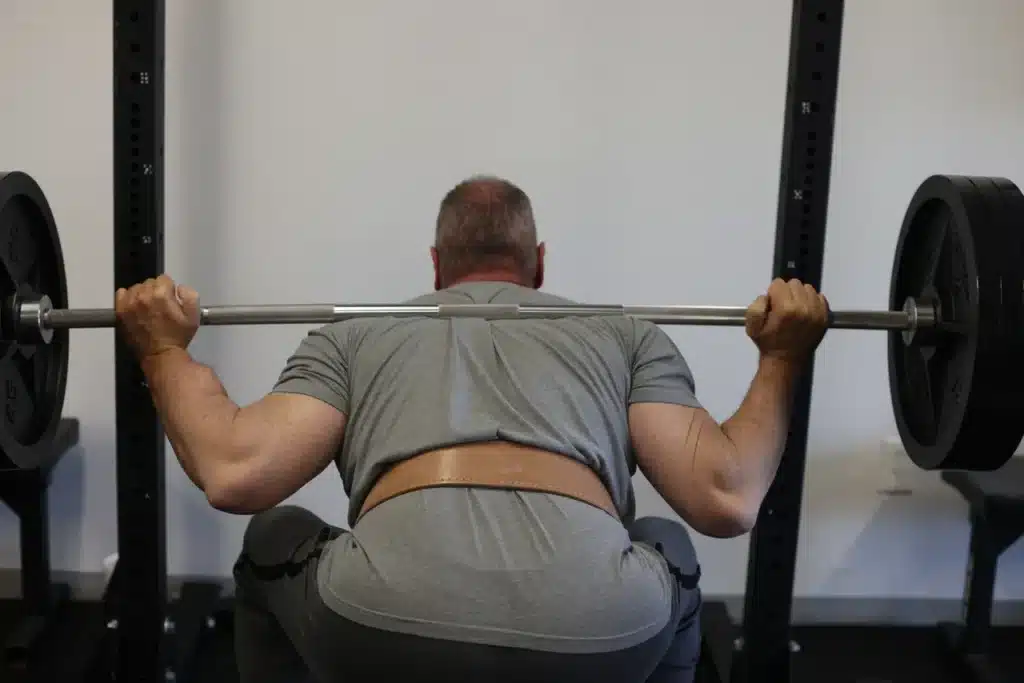
When I first started lifting, I didn’t have a clear goal. Like a lot of beginners, I just knew I wanted to get bigger and stronger. But I didn’t understand how those two things actually worked together. So I did what most people do in a commercial gym: I looked around and copied the biggest guy I could find (setting aside the fact that the “biggest guy” in most commercial gyms often isn’t really that strong).
And just like 90% of gym-goers, he was high bar squatting. So I did too.
At the time, I probably weighed around 180 lbs and was squatting about 185. Not long after, my knees started to ache. I didn’t think much of it at first. I chalked it up to normal soreness — the kind you expect when your muscles are adapting to training. But this wasn’t that.
The pain got worse. It wasn’t muscle soreness anymore. It felt like something deeper — something wrong. What I didn’t know then, but learned later, was that I was developing patellar tendonitis.
One day, frustrated and limping out of another leg day, I finally googled: “Why do my knees hurt when I squat?”
And that’s when I found Mark Rippetoe.
I watched this breakdown of the low bar squat and everything clicked.
As I delved deeper into this method of squatting I began to understand the significance of placing your knees and hips further back. The forward knee position of the high bar squat explained exactly what I was feeling — and more importantly, I now understood how to fix it. All I had to do was move the bar lower on my back.
So I did.
And just like that, my knee pain disappeared.
Why the Low Bar Squat Works
When you place the bar lower on your back — across the rear delts, just below the spine of the scapula — it forces you to lean over more during the squat. This isn’t bad form. It’s how the movement works when executed correctly.
That forward lean in combination with your hips back, shifts the load farther back, spreading it more evenly between the hips and knees. The result is that your knees don’t shoot forward as much, and the excess force on the patellar tendon drops dramatically.
In my case, it was the difference between constant pain and sustainable progress.
Years Later: Now I Teach It
Fast forward to today, I’m a strength coach and the owner of Traditional Strength Gym. I’ve coached clients in their 20s through their 90s, from post-surgery recovery to competitive lifting — and I teach predominately the low bar squat.
It’s not just about lifting more weight (though you will).
It’s about doing it safely, consistently, and without pain.
Even my clients with previous knee injuries — including ACL and meniscus repairs — report that the low bar squat eliminates anterior knee pain completely when taught and executed properly.
Final Word
If your knees hurt when you squat, the problem isn’t your knees. It’s your technique.
Before you blame your body or assume lifting is dangerous, fix your bar placement.
Learn the low bar squat. Train with intent. And if you need help, that’s what we do here.
Need coaching?
Set up a free consultation at tradstrength.com — and start squatting the way your body was meant to.

By Greg Herman
Owner and Head Coach
of Traditional Strength Gym
in Edmond, Oklahoma