

Over the last few years, semaglutides like Ozempic and Mounjaro have become a popular way for people to get the physique they want. And while these drugs can be beneficial in serious cases, they aren’t without a cost. Estimates range anywhere from 10% to 40% of the weight lost on these medications as being lean muscle tissue.
I’m not here to tell you whether that trade-off is worth it. That’s up to you. But I am going to give you a simple strength training approach to help you keep as much muscle as possible while using semaglutides.
Dietary Considerations
These drugs are strong. They regulate blood sugar and suppress appetite. That drop in appetite leads to less food overall—which also means fewer nutrients for recovery.
Protein intake is already important when you’re lifting weights. But if you’re also using a drug that limits your appetite, it’s even more critical. If you want to sustain muscle, you need to ensure you get enough protein in your diet to facilitate recovery.
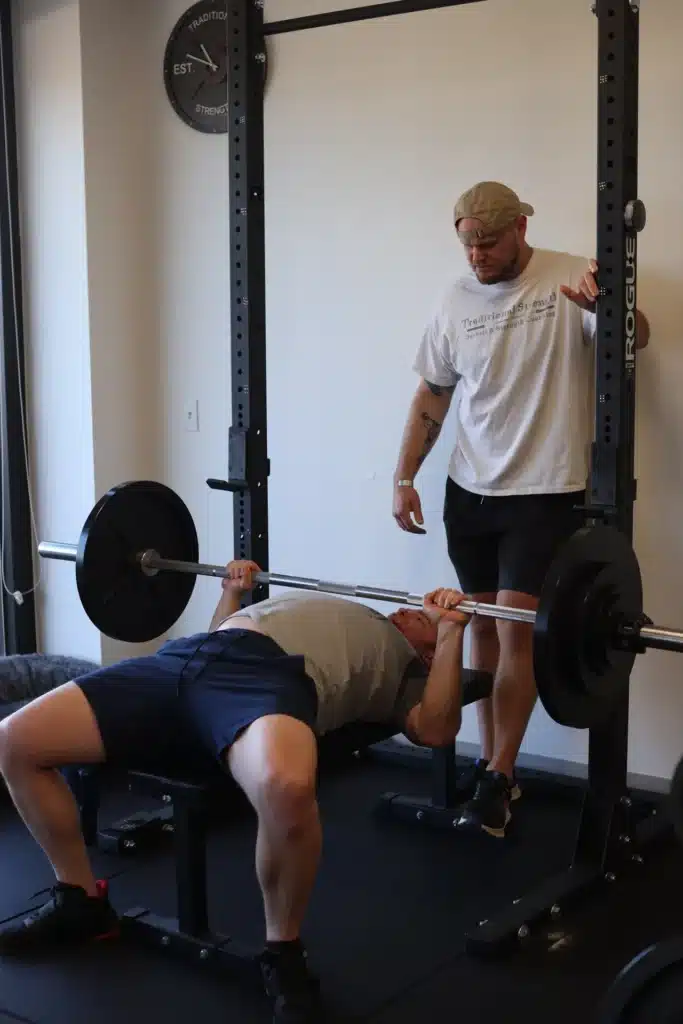
Exercise Selection
Getting stronger isn’t complicated.
You’re here to be efficient. That means no wasted time, no unnecessary exercises. You need movements that train as much of your body as possible in as few exercises as possible.
So here’s what you do: base your training around the squat, bench press, overhead press, and deadlift.
These are compound movements. They involve big muscle groups, they build real strength, and they give you the best return on your investment. If your goal is to keep muscle on your frame while you drop body fat, these are your tools.
Now here’s how you apply them.
Programming the Exercises
If you’re new to lifting, the first thing to understand is this: you do not need to train every day. Early on, you can get away with it, but when the weight gets heavy you will regress if you don’t rest between sessions. So start with a three-day-per-week schedule from the beginning, lifting every other day.
Your goal here is to retain muscle. But really, muscles only do one of two things: grow or shrink. So you’re not just trying to “maintain”—you’re trying to build muscle tissue. And to know whether it’s working, you need to track your progress by seeing the weight on the bar increase.
The good news is, progress doesn’t have to be fast. The barbell can be loaded light or heavy depending on what you need. What matters is that you’re adding weight to the barbell every session.
Here’s the program:
- Each day you squat, you press (alternate bench and overhead), and you deadlift.
- Do 3 sets of 5 reps for each lift.
- Add 5 lbs to each lift every session.
That’s it. It’s a full-body workout every time. It’s efficient. It works. You don’t need anything else.
As long as you’re hitting your protein target and letting your body recover from the previous workout, this setup will drive the strength adaptation you are desiring. Doing all these things will give you the best possible chance at retaining muscle mass while letting the Ozempic drop the fat. Just remember that weight training should not be rushed. It is a lifelong commitment to progress.

By: Greg Herman
Owner and Head Coach
of Traditional Strength Gym
in Edmond, Oklahoma