
Building Strength with Just One Workout Per Week
Previously, we explored how to train effectively on a tight schedule with four one-hour sessions per week. But what if your situation is even more restrictive? Suppose you work six days a week, travel constantly, and only have one day—say, Saturday or Sunday—to train. Can you still build a base level of strength?
Yes, you can. But it won’t be easy, and one hour won’t cut it.
In this bare-bones approach, your single weekly training session will need to be comprehensive and intense. The goal is to apply enough stress to stimulate progress, then use the following six days for recovery. That means you must train your entire body in one session—and train it hard.
Why Barbells?
To make the most of limited time, we’ll rely exclusively on barbell lifts. Barbells allow you to move heavy weight with compound exercises that engage multiple muscle groups at once. The four lifts that form the core of this program are:
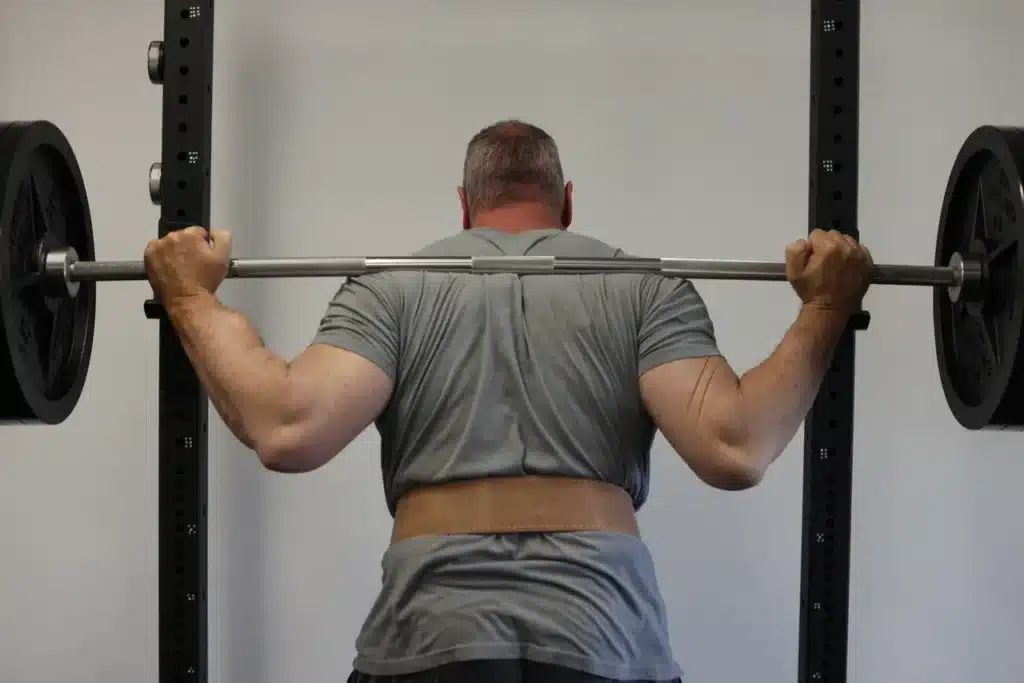
- Back Squat
- Bench Press
- Overhead Press
- Deadlift
These Traditional Strength building movements provide the biggest return on your training investment—strength, coordination, and muscle mass across your entire body.
The One-Day Strength Routine
Here’s what your weekly training day should look like:
1. Back Squat
5 sets of 5 reps at a moderately heavy weight
This is the cornerstone of your session. Five working sets of five reps will generate enough volume and intensity to drive strength adaptations. The key is to pick a weight you can complete with good form—then increase it slightly the next week.
2. Bench Press
1–3 heavy sets of 3–5 reps, followed by
1–4 backoff sets of 5+ reps at ~90%, or even an AMRAP (as many reps as possible) at ~70% of your top set.
This structure gives you the benefit of heavy work without exhausting you, and the backoff sets provide extra volume to build muscle and refine technique. A common and effective approach: 1 top set of 5 reps, then 4 backoff sets of 5 reps.
3. Deadlift
1–2 sets of 5 reps at a moderate weight
OR
3 sets of 3 reps at a heavier weight
By now, fatigue will be setting in. Deadlifts overlap heavily with the squat in terms of muscle use, so be conservative here. Pick a format that challenges you without draining you—remember, you’ll need to lift more next week to progress. Think of these sets as submaximal but demanding.
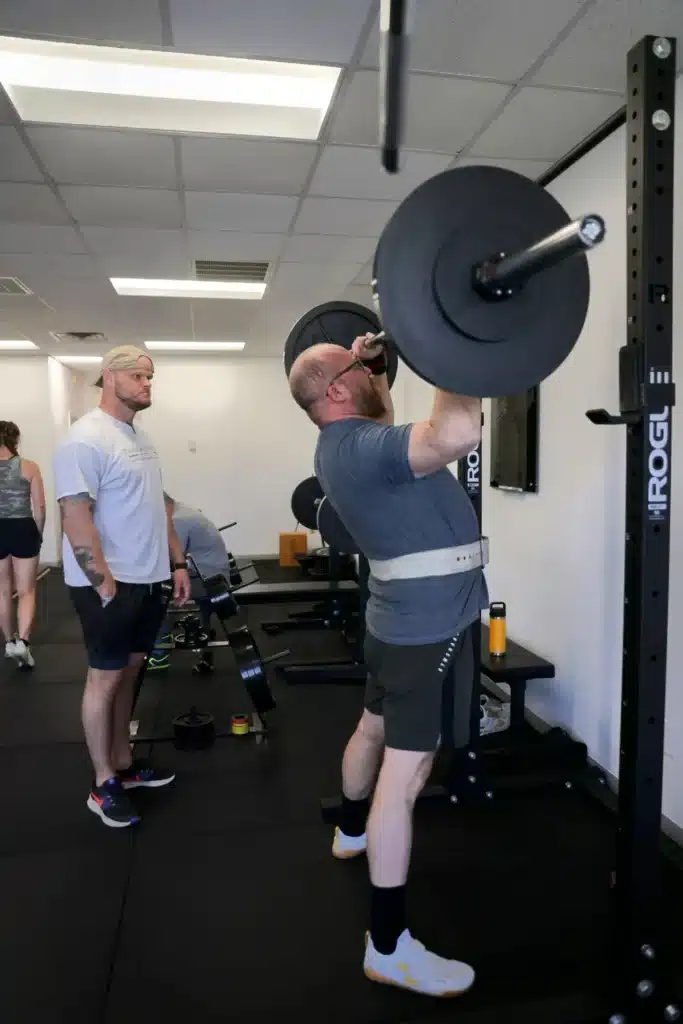
4. Overhead Press
1 heavy set of 5–8 reps
You’re near the end of the session, so economy of effort is key. One solid set of overhead pressing can suffice—especially if you bench pressed earlier in the workout. Since the overhead press has a longer kinetic chain than the bench press, it’s more taxing and can often benefit from being placed earlier in the session. But more preferably you should alternate this exercise weekly with bench press. If you do, the same heavy + backoff set model from the bench press applies here.
A Note on Order and Progression
Order matters, but not rigidly. If overhead pressing is a priority or feels better done fresh, start there and do the bench after your deadlifts. Alternating these weekly will help with recovery and balance pressing volume.
Above all, the goal each week is progression. That doesn’t mean hitting PRs every session, but it does mean consistently adding weight, reps, or improving technique.
Time Commitment
This full-body routine will take around 2 to 2.5 hours. It’s not short—but it’s efficient. In just one long weekly session, you can maintain or even build strength if you approach it with focus and intensity.
Final Thoughts
Training once per week isn’t ideal—but it’s doable. It requires more volume, better recovery, and a serious commitment to progress. Stick to the basics. Push your sets. Recover well.
If you do it right, you’ll be surprised at how much strength you can build—even on the tightest schedule.

By Greg Herman
Owner and Head Coach
of Traditional Strength Gym
in Edmond, Oklahoma