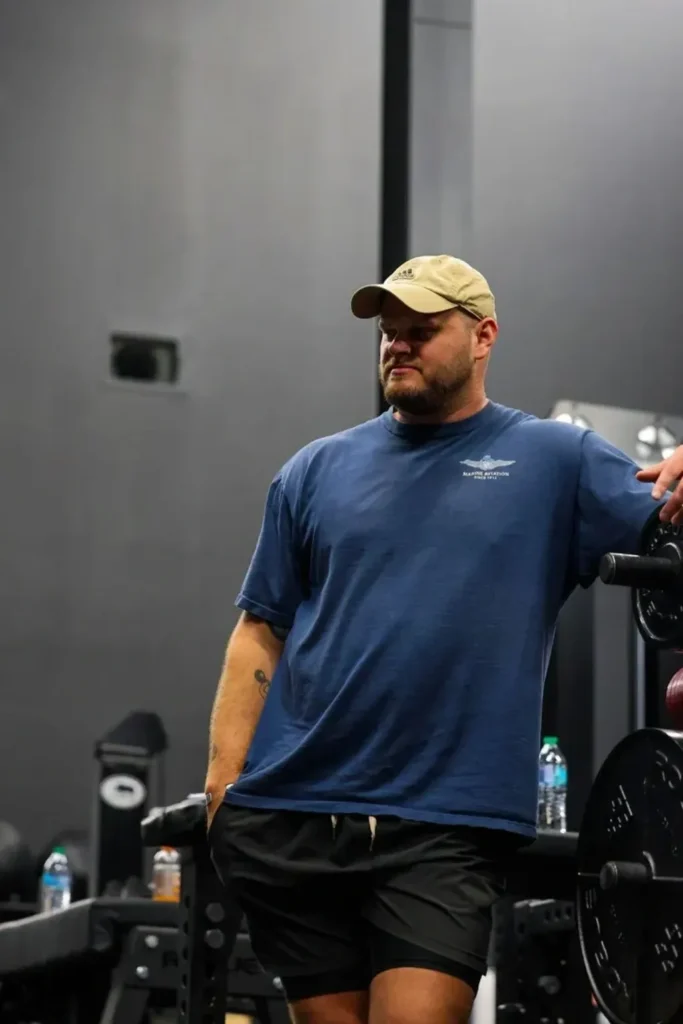
At the age of nineteen, I was the textbook definition of a loser. I had low self esteem, a 1.9 GPA, no girlfriend, no prospects, and no reason to improve my situation. Upon my high school graduation, I did the typical American thing to do, which was to put reality off for four more years, and go waste my parent’s money in college.
Shortly thereafter, I had the very serious realization that I was failing in life and something needed to be done about it. Little did I know, that my subconscious was leading me to find a Rite of Passage. Two weeks after joining college, I dropped out. And four months after dropping out of college, I joined the Marines.
The Marine Corps was intended to serve a purpose for me. I knew that I had no mental fortitude, and was hopeful that the military would toughen me up. It just so happened that it did not toughen me up. Many people consider joining the military to be an American Rite of Passage for young men, along with college, or marriage. I would argue many of these paths are now, less viable solutions, to the coming of age problem America has.
The Marine Corps has a method of determining ones combat readiness which is called The Crucible. The Crucible is a 45-mile, 54-hour event that makes Marines work as a team to solve problems in a high stress environment. It is a Rite of Passage for all Marines. That was not however, my experience. I saw it as a glorified hiking trip that left my hunger for mental toughness un-satiated. For me, and many of the other young men in my bootcamp platoon, The Crucible was a cake walk. I left USMC bootcamp not with the mental toughness I was searching for, but instead, a 5 year contract of obligation. This, inevitably led me to weight training.
There are many Rites of Passage throughout life. Not all of which are completed and many of which, when left uncompleted, lead to an unfulfilled life. There is the birth rite, transition into adulthood (coming of age), marriage, parenthood, becoming an elder in your community, and death. Of these, only two are certain. But certain societal trends are showing us the importance of the second ROP.
Many young men and women across America, are delaying entry into adulthood. This can be seen in the crime rate, the birth rate, duration of stay in their parents home, the decline of traditional marriages, the divorce rate, so on and so forth. We attribute this to a variety of factors, but chief among them is the lack of acknowledgement of the transition out of adolescence. And subsequently, the lack of accepting the newly bestowed responsibilities that come with adulthood.
Sure, the government tells you that at 18 you are an adult. They tell you; you can vote, join the military, and be held legally accountable as an adult. Then they turn around and tell you you are not enough of an adult to purchase a pistol, drink alcohol, or use tobacco. These types of policies and laws disregard the acknowledgement necessary by the community for the coming of age ceremony to be completed.
So we have established why a Rite of Passage is important. How do we identify the criteria of a Rite of Passage for transitioning into adulthood? We can look to the numerous examples still provided by other cultures around the world for an answer. All of these cultures have four common themes behind a coming of age ROP. They include a ritual, a community, a lesson or multiple lessons, and a challenge. Most of which are part of a religious process; the Jewish Bar/bat-mitzvah, Catholic Confirmation, or Amish Rumspringa. But some, like The Crucible are intended to be secular (this also was not my experience in The Crucible).
It is my belief that the process of weight training is also a Rite of Passage. And it works for all ages. There is a ritual that the lifter goes through when preparing to do the difficult task of hitting a Personal Record. The lifter must eat beforehand, gather their training equipment, get to the gym, gear up, and warmup. There is a community at the gym that cheers on the participant whether online or in the gym. The community gives accolades and acknowledges the lifters progress, encourages them to do more, lift heavier. The participant is acknowledged in their hard work every time a friend or family member says, “you’ve gotten bigger”. The participant learns lessons about their limitations and their ability to exceed them under the bar. They learn how to move, how to breath, how to prepare for a major stressor, and endure it. And the participant MUST willingly accept the challenge of performing the work under the bar by seeing it to completion. No one else can do this for them.
Additionally, doing all of these things one time is insufficient. The process of weight training demands repeated weekly sessions, often 3-4 per week. This constant long term accumulation of stress forges a new person in the process. A more resilient, confident, and physically stronger individual. The participant must make serious and consistent lifestyle changes to advance through this ROP. Their sleep must be consistent and sufficient. Often this means that the participant has to choose between partying hard or having a successful workout the next day in the gym. The participant must eat so they can recover and grow as a result of the previous challenge they had conquered.
And perhaps most important for the younger participants, they must see the weight on the bar, question whether they can succeed at lifting it, and CHOOSE to attempt it anyway. This is no small task. In fact, in terms of significance to mental toughness, it is the most critical. Being forced into a stressful situation can have negative consequences. But deciding to engage in a controlled, stressful situation has benefits. Every time the participant goes to the gym, they know its going to be a little harder than last time, and they learn that they can succeed if they try.
Thus, I argue that for the reasons above, these rituals, lessons, communities, and challenges, are the shock to the system that the participant needs to advance in life and is an adequate substitute for a Rite of Passage into adulthood for our modern era. And that Rite of Passage we call, weight training.