
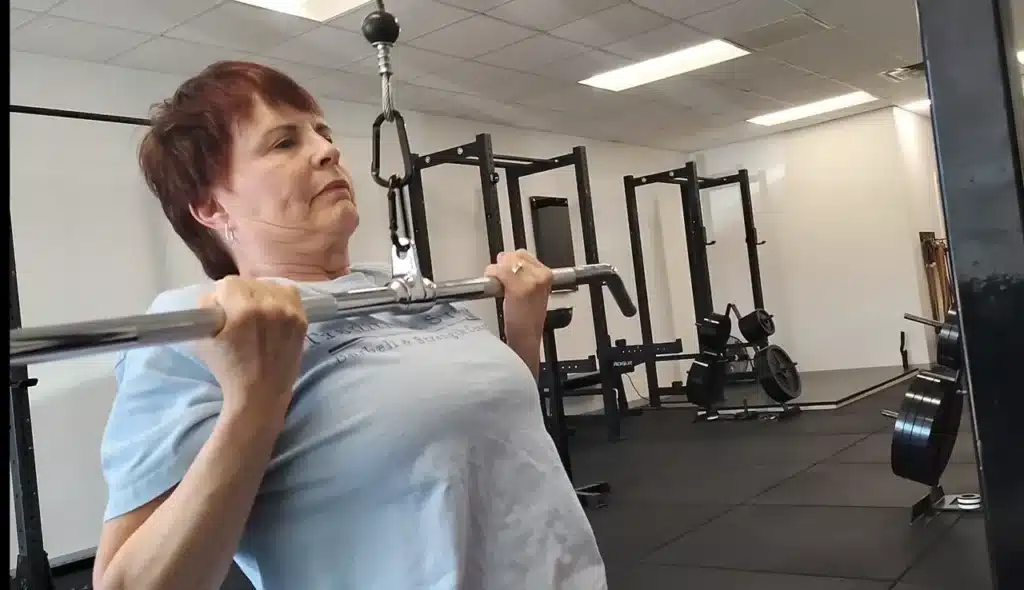
Strength Is the Most Valuable Physical Characteristic as We Age
Strength is defined as the ability to produce force against an external resistance. As we age, this becomes more than a definition—it becomes a lifeline. In everyday life, especially for older populations, strength means the difference between catching yourself during a fall or suffering a hip fracture.
By now, most of us have seen the MRI cross-section of a femur and the surrounding muscle tissue. That image has been tied directly to longevity and decreased all-cause mortality. The larger the muscle mass around the femur, the greater the life expectancy. Not how many miles you walk. Not your time in the orange zone. Not your VO2 max.
It all comes down to lean muscle mass—and the only proven way to build that is strength training.
Since this is a well-established fact, let’s skip the “why” and move on to the more useful question:
How Do We Optimize Muscle Growth?
Should you be doing more tricep pushdowns or goblet squats?
No. You should be training with a barbell.
Barbells have a bad rap. We’ve allowed people in positions of authority to convince us that squats and deadlifts are “bad for your back.” But the reality is the opposite. Barbells aren’t inherently dangerous—they are a tool. When used correctly, they allow people to build meaningful strength well into their 60s, 70s, and beyond.
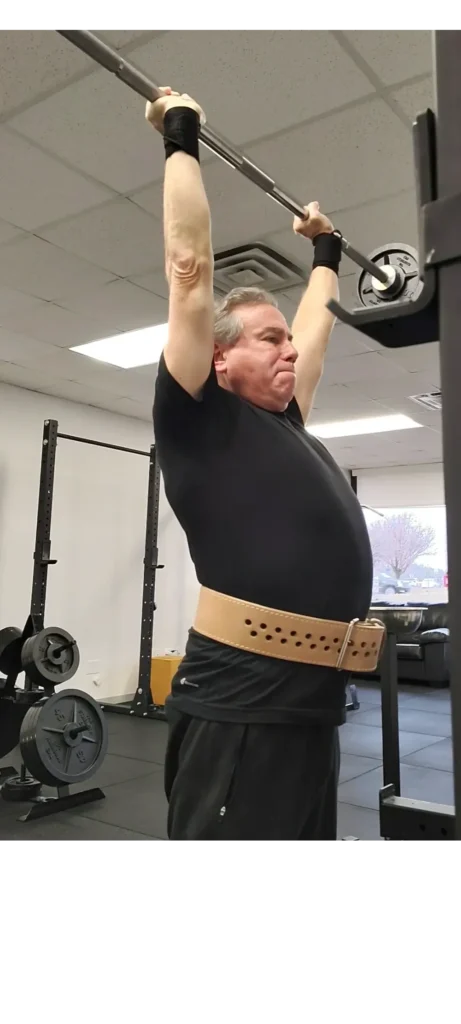
Why the Barbell?
Because it allows us to load anatomically normal, functional human movement patterns.
- Wanna pick up a heavy box from the floor? Train the deadlift.
- Wanna put that heavy box on top of the fridge? Train the overhead press.
- Wanna keep that box from crushing you when it falls? Train the bench press.
You get the idea.
Barbell lifts like squats, deadlifts, presses, and rows allow us to train multiple large muscle groups at once. We’re not interested in isolating the bicep or the hamstring. We want to train those muscles in the capacity they were meant to be used—as part of a larger system, supported by stabilizers, working together.
This approach allows us to:
- Train more muscle at once
- Move more weight
- Get stronger faster
The Linear Progression Advantage
Another key advantage of barbell training is that it’s progressive. You can start light, then add a little weight to the bar each workout. Over time, those small increases add up to serious strength.
That’s the key.
Because remember—strength is your ability to produce force against an external resistance. In this case, the barbell is the resistance. To get stronger, the bar has to get heavier.
Once it does, and once you’ve trained consistently, everyday tasks feel easy. You can move your own bodyweight with confidence. That means:
- Fewer falls
- Fewer fractures
- More lean muscle mass supporting your bones
And that’s the whole point.
Read more about how this method works by clicking here
So what does this all mean?
It means if you’re serious about staying independent, mobile, and capable as you age, then you need to get serious about strength. And if you’re serious about strength, then you need to get under the bar.
Because the barbell gives us the most efficient, effective, and proven way to build the kind of muscle that keeps us alive longer—and living better.
Strength is not optional. It’s the foundation.
Ready to build lasting strength and take control of your health?
Don’t wait until everyday tasks become a struggle or a fall changes everything. At Traditional Strength, we specialize in safe, effective barbell coaching tailored to your goals and experience level.
Schedule your free consultation today and discover how strength training can transform your life—helping you stay independent, confident, and strong for years to come.
Click here to book your free consult and take the first step toward a stronger, healthier you.

By Greg Herman
Owner and Head Coach
of Traditional Strength Gym
in Edmond, Oklahoma